
Picture a test website created for a short-term project and never taken down. Months later, an attacker discovers it’s still online and still accepting an old set of credentials. Those credentials use a reused password, providing access to a cloud account with excessive permissions. From there, the attacker moves through connected systems until they reach the environment that supports critical business operations.
More often than not, the starting point for such incidents is a forgotten asset, an overprivileged identity, or an outdated trust relationship, not a sophisticated exploit. The difficulty lies in identifying these exposures before they are discovered and exploited by an attacker. Around 84% of Indian CISOs reported that they don’t have complete visibility of their organization’s cybersecurity exposures. Security teams cannot secure assets they don’t know exist.
This article examines the major enterprise attack surfaces, why they matter, and how attackers use them to establish initial access. The next article will discuss initial access through the Cyber Kill Chain and MITRE ATT&CK to show how individual exposures become complete attack paths.
What Has Changed and Why This Matters Now
An enterprise attack surface is the collection of assets, identities, applications, services, data repositories, cloud resources, application programming interfaces (APIs), remote access infrastructure, operational technology (OT), third-party connections, and trust relationships that could be exploited to gain unauthorized access.
The enterprise attack surface has extended well beyond endpoints and internet-facing applications to include cloud platforms, SaaS, APIs, machine identities, AI services, and third-party integrations.
Three changes have had the biggest impact on enterprise exposure.
- Identities now outnumber users. Service accounts, machine identities, API keys, access tokens, and certificates often outnumber employees, increasing the number of authentication paths that require protection.
- AI is expanding the attack surface. Large language models and AI agents introduce new APIs, identities, and trust relationships that must be secured.
- The perimeter has disappeared. Cloud, SaaS, remote work, and third-party integrations have replaced a defined network boundary with a distributed enterprise.
Understanding Enterprise Attack Surface Management
Attack Surface Management (ASM) is the continuous process of discovering, inventorying, monitoring, and reducing an organization’s exposure across on-premises infrastructure, cloud environments, identities, applications, and internet-facing assets. Its objective is to maintain a continuously updated inventory of assets and exposures that could be exploited.
Because no single technology can provide complete visibility across a modern enterprise, organizations typically rely on two complementary capabilities:
- External Attack Surface Management (EASM) focuses on assets exposed to the public internet, including domains, subdomains, Domain Name System (DNS) records, certificates, cloud resources, exposed services, and internet-facing infrastructure.
- Cyber Asset Attack Surface Management (CAASM) correlates data from asset inventories and security tools to improve internal visibility. It aggregates information from Configuration Management Databases (CMDBs), Endpoint Detection and Response (EDR) platforms, Identity and Access Management (IAM) systems, cloud inventories, vulnerability scanners, and other sources to identify unmanaged assets, ownership gaps, and missing security controls.
Neither capability provides complete visibility on its own. EASM can identify internet-facing assets but cannot detect internal identity risks, unmanaged assets, or excessive permissions. CAASM provides visibility into internal assets and security controls but cannot identify unknown internet-facing infrastructure that falls outside the organization’s inventory.
ASM also forms the foundation of Continuous Threat Exposure Management (CTEM). Within the CTEM cycle, ASM provides the discovery and visibility needed to identify potential exposures, while capabilities such as EASM and CAASM help maintain an accurate inventory that supports exposure prioritization, validation, and remediation.
Effective attack surface management therefore focuses on identifying unknown assets, validating ownership, prioritizing remediation, and reducing the opportunities available to attackers.
External Attack Surface
The external attack surface consists of every asset accessible from the internet, including web applications, VPN gateways, remote access portals, email gateways, DNS infrastructure, cloud workloads, development environments, object storage, administrative interfaces, and public code repositories. Because these assets are publicly reachable, they are continuously indexed, fingerprinted, and assessed by attackers searching for an initial foothold.
Case in point: In 2025, attackers exploited the ToolShell zero-day vulnerabilities (CVE-2025-53770 and CVE-2025-53771) affecting internet-facing Microsoft SharePoint servers. These vulnerabilities had no patch available at the time of exploitation and bypassed fixes Microsoft had released earlier that month for related issues. As a result, even organizations that had applied the latest available updates remained exposed. The compromised SharePoint servers provided an entry point for remote code execution, credential theft, and further compromise of enterprise environments, demonstrating how internet-facing services remain a primary target during large-scale exploitation campaigns.
Common examples of external attack surface exposures include:
- Unmanaged assets, including forgotten development and staging environments, legacy applications, abandoned subdomains, and orphaned cloud resources.
- Misconfigured internet-accessible services, including administrative interfaces, remote access portals, storage repositories, and development systems that expose sensitive information or provide unintended access.
- Infrastructure that has fallen out of operational ownership, including assets inherited through mergers and acquisitions, temporary deployments, or systems that are no longer monitored, patched, or regularly reviewed.
Maintaining an accurate inventory of internet-facing assets remains a significant challenge. Systems that are not tracked are unlikely to be patched, monitored, or included in routine security assessments, allowing overlooked assets to become entry points into the enterprise.
Identity Attack Surface
The identity attack surface includes every digital identity that can access enterprise resources, including user accounts, privileged identities, contractors, service accounts, machine identities, API keys, OAuth applications, certificates, and authentication tokens. As organizations adopt cloud platforms and identity-centric security models, attackers increasingly target identities because legitimate credentials provide direct access to enterprise resources without exploiting software vulnerabilities.
Case in point: In 2023, attackers associated with the Scattered Spider group researched an MGM Resorts employee using publicly available information, and then impersonated the employee during a call to the IT help desk. After convincing the help desk to reset authentication factors for a privileged account, they gained access to the organization’s identity infrastructure and moved through the environment, disrupting hotel and casino operations. MGM later disclosed an estimated financial impact of approximately $100 million, demonstrating how a compromise of identity processes can have enterprise-wide consequences.
Common identity exposures include:
- Dormant, shared, and orphaned accounts that remain active beyond their intended use.
- Excessive privileges, weak role assignments, and privileged identities that have more access than required.
- Unmanaged service accounts, machine identities, API keys, certificates, and authentication tokens that are difficult to inventory, rotate, and monitor.
- Weak identity governance, including stale group memberships, legacy vendor access, and misconfigured trust relationships across cloud and SaaS environments.
- Inconsistent authentication controls, such as legacy authentication, incomplete MFA enforcement, or gaps in Conditional Access policies.
Identity ecosystems span on-premises directories, cloud identity providers, SaaS applications, workloads, and machine identities, creating a highly distributed access model. As identities continue to grow in number and complexity, maintaining visibility, enforcing consistent access controls, and validating who and what should have access become ongoing security challenges.
Cloud Attack Surface
The cloud attack surface includes virtual machines, containers, serverless functions, object storage, IAM roles, secrets managers, Infrastructure as Code (IaC), CI/CD pipelines, and cloud management APIs. Because cloud resources are continuously provisioned, modified, and decommissioned, the attack surface changes constantly. As a result, attackers often target identity, permission, and configuration weaknesses rather than software vulnerabilities. A single misconfiguration, such as an overly permissive IAM role retained by a CI/CD pipeline, can expose credentials or privileges that provide access well beyond the intended environment.
Case in point: In 2019, attackers exploited a misconfigured web application firewall to perform a Server-Side Request Forgery (SSRF) attack against a cloud-hosted application. The attack retrieved temporary credentials from the instance metadata service, which were then used to access overprivileged IAM roles and exfiltrate data affecting more than 100 million customers. The incident demonstrated how cloud misconfigurations and excessive permissions can combine into a significant security breach.
Common cloud exposures include:
- Excessive IAM permissions, including overprivileged users, roles, and service identities that violate least-privilege principles.
- Misconfigured cloud resources, such as publicly accessible storage, databases, virtual machines, or management interfaces.
- Unsecured workloads and platforms, including containers, Kubernetes clusters, serverless functions, and CI/CD pipelines that lack appropriate security controls.
- Poorly managed secrets and credentials, including exposed API keys, access tokens, certificates, and credentials stored in code repositories or configuration files.
- Misconfigured trust relationships, including overly permissive cross-account access, role assumption policies, and federated identity configurations.
Cloud environments evolve continuously as resources, identities, and configurations are created, modified, and removed. Maintaining visibility into these changes requires continuous discovery, configuration monitoring, and identity governance to reduce exposure before it can be exploited.
API Attack Surface
APIs enable communication between web applications, mobile apps, cloud services, third-party integrations, and AI platforms. Because they expose business logic and backend functionality directly, weaknesses in authentication, authorization, and configuration can provide access to sensitive data and critical functions.
Case in point: In 2023, attackers exploited an exposed API at T-Mobile to access customer account information over several weeks before the activity was detected. The breach affected approximately 37 million customer accounts and demonstrated how insecure APIs can become a significant source of enterprise exposure.
Common API exposures include:
- Broken authorization controls, including Broken Object Level Authorization (BOLA) and Broken Function Level Authorization (BFLA).
- Weak authentication and token management, including exposed API keys, poorly validated JWTs, and insecure authentication mechanisms.
- Misconfigured API implementations, including unrestricted GraphQL introspection, excessive query depth, and inadequate rate limiting.
- Excessive data exposure, where APIs return more information than required.
- Undocumented or deprecated APIs, often referred to as shadow or zombie APIs, that remain accessible outside normal security governance.
APIs change rapidly as new endpoints are deployed, existing interfaces are updated, and legacy versions remain active. Without continuous discovery, inventory management, and governance, unmanaged APIs can become a significant source of enterprise exposure.
AI Attack Surface
The AI attack surface includes large language models (LLMs), AI agents, model APIs, retrieval-augmented generation (RAG) systems, vector databases, AI plugins, orchestration frameworks, and the identities, data sources, and third-party services they rely on. As organizations integrate AI into business workflows, these systems introduce new trust relationships and privileged access paths that extend the enterprise attack surface.
Case in point: In 2025, security researchers disclosed EchoLeak, a vulnerability affecting Microsoft 365 Copilot that allowed specially crafted prompt injection attacks to access and exfiltrate sensitive enterprise data without requiring user interaction. The incident demonstrated that AI assistants connected to enterprise data sources can introduce new attack paths where prompt injection, permissions, and application integrations become part of the organization’s attack surface.
Common AI exposures include:
- Excessive permissions granted to AI agents and service identities.
- Prompt injection and indirect prompt injection through untrusted content.
- Insecure model APIs, plugins, and tool integrations.
- Sensitive data exposure through prompts, embeddings, or vector databases.
- Poor governance of AI models, datasets, and third-party AI services.
As AI systems become embedded in enterprise workflows, securing them requires the same continuous visibility, identity governance, and access control applied to other enterprise assets, along with controls specific to AI models and their integrations.
Third-party Attack Surface
The third-party attack surface includes every external organization or service with trusted access to enterprise systems, including cloud providers, managed service providers (MSPs), software vendors, payment processors, consultants, outsourced development teams, and supply chain partners. These relationships often rely on privileged accounts, VPN access, API integrations, or remote administrative access, extending the attack surface beyond the organization’s direct control.
Case in point: In the 2020 SolarWinds supply chain attack, adversaries inserted malicious code into legitimate software updates for the SolarWinds Orion platform. Approximately 18,000 customers downloaded the compromised updates, providing the attackers with a potential foothold into trusted enterprise environments. The incident demonstrated how compromising a trusted supplier can expose thousands of organizations through a single software update.
Common third-party exposures include:
- Trusted third-party access, including vendor accounts, VPN connections, remote administration tools, and API integrations with excessive or persistent privileges.
- Weak third-party security controls, where suppliers, service providers, or software vendors introduce risk through inadequate security practices, insecure software development, or poor identity and access management.
- Poor third-party governance, including unmanaged vendor relationships, outdated integrations, and access that remains active after projects, contracts, or business relationships have ended.
Third-party relationships often extend beyond the organization’s direct visibility and control, making them difficult to govern consistently. Regular reviews of vendor access, software dependencies, and trusted integrations are essential to reduce exposure and limit the risks introduced through the supply chain.
Operational Technology (OT) and IoT Attack Surface
The OT and IoT attack surface includes industrial control systems (ICSs), programmable logic controllers (PLCs), SCADA systems, connected sensors, building management systems, smart devices, and other operational technologies that support physical processes. Once isolated from enterprise networks, these systems are now routinely connected to cloud platforms, remote management tools, and corporate IT environments to enable monitoring, automation, and predictive maintenance. While this connectivity improves operational efficiency, it also expands the attack surface, allowing cyber incidents to disrupt manufacturing, healthcare, energy production, transportation, and other critical services.
Case in point: In 2021, an attacker gained unauthorized remote access to the control systems of the Oldsmar, Florida, water treatment facility and attempted to increase the amount of sodium hydroxide in the water supply. Although operators detected the changes before they caused harm, the incident demonstrated how exposed remote access to operational technology can allow attackers to manipulate industrial control systems and potentially disrupt critical infrastructure.
Common OT and IoT exposures include:
- Legacy and unsupported systems, including operating systems, industrial devices, and software that cannot be easily patched or upgraded.
- Insecure remote access and network connectivity, including VPNs, engineering workstations, remote maintenance platforms, and weak segmentation between IT and OT environments.
- Weak device security and industrial configurations, including default credentials, insecure industrial protocols, outdated firmware, and poorly managed connected devices.
OT and IoT environments often prioritize availability and safety over frequent system changes, making traditional security practices difficult to apply. Continuous asset discovery, network segmentation, secure remote access, and lifecycle management are essential to reduce exposure without disrupting critical operations.
Human and Physical Attack Surface
Organizations often invest heavily in technical controls while overlooking user awareness and physical security. However, a single successful social engineering or physical intrusion attempt can bypass multiple layers of security.
The human and physical attack surface includes employees, contractors, help desk personnel, physical facilities, and workplace processes that attackers can manipulate to gain unauthorized access. Unlike technical attacks that exploit software vulnerabilities, these attacks target human behavior, trust, and physical access to bypass established security controls.
Common human and physical attack techniques include phishing, Business Email Compromise (BEC), help desk impersonation, multi-factor authentication (MFA) fatigue, QR phishing, vishing, tailgating, badge cloning, malicious USB devices, and unauthorized access to unattended workstations or exposed network ports. These attacks exploit human behavior and trust rather than software vulnerabilities, making them common path to initial access. Phishing remains one of the most common techniques and is covered in detail in our guide on Phishing Attacks.
The Challenge of Continuous Visibility
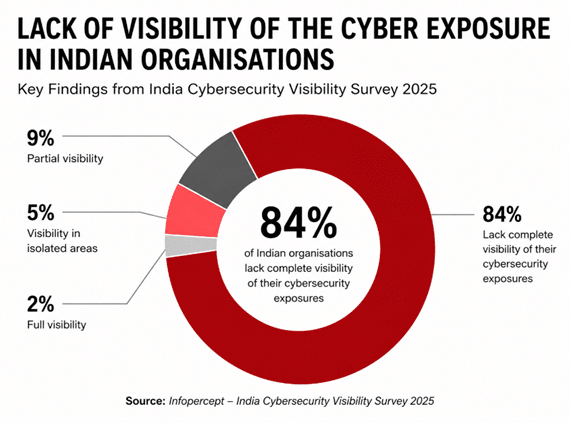
Security programs depend on visibility, but visibility is rarely complete. Vulnerability scanners assess known assets, EDR protects managed endpoints, cloud security tools monitor connected accounts, and penetration tests evaluate systems within an agreed scope. Each control performs its intended function, yet all depend on the assumption that the organization already knows what exists.
Assets that are not discovered or accurately inventoried are unlikely to be monitored, patched, or included in routine security assessments, creating blind spots that attackers actively exploit.
Reducing enterprise exposure therefore requires more than identifying vulnerabilities. Organizations must continuously discover and inventory assets, validate ownership, and prioritize the exposures that present the greatest business risk. The next step is understanding how these seemingly independent exposures connect into attack paths, a topic we will explore in the next article.
From Visibility to Validation
Understanding the attack surface is the first step toward building a stronger security posture. The real challenge is determining which exposures can be exploited, how they connect into attack paths, and which ones present the greatest risk to the business. That requires validating assumptions through offensive security testing rather than relying solely on automated tools.
At Anzen, we help organizations move from visibility to actionable risk reduction by identifying, validating, and prioritizing the exposures that matter most.
- Attack Surface Assessment (ASA): We continuously discover internet-facing assets, shadow IT, unmanaged infrastructure, and exposed services to help organizations maintain an accurate, up-to-date view of their enterprise attack surface.
- Vulnerability Assessment and Penetration Testing (VAPT): Our security consultants validate exploitable weaknesses across external, internal, cloud, API, wireless, and Active Directory environments, helping organizations distinguish theoretical findings from vulnerabilities that pose real business risk.
- Red Team Assessments: We emulate real-world adversaries by combining technical exploitation, identity compromise, third-party abuse, social engineering, and physical security testing to demonstrate how individual weaknesses can be chained into complete attack paths.
Whether you’re evaluating a rapidly expanding cloud environment, strengthening identity security, or preparing for a compliance assessment, our offensive security experts help you identify the attack paths that matter before attackers can. Ready to understand your organization’s true attack surface? Contact Anzen to schedule an Attack Surface Assessment or speak with our security experts about reducing enterprise exposure.
FAQ’s
What is attack surface?
An attack surface is the collection of assets, identities, applications, services, and trust relationships that an attacker could exploit to gain unauthorized access.
What is attack surface management?
Attack Surface Management (ASM) is the continuous process of discovering, inventorying, monitoring, and reducing an organization’s cybersecurity exposures across internal and external attack surfaces.
Why is attack surface management important?
Organizations cannot secure assets they do not know exist. ASM helps identify unknown assets, misconfigurations, and exposures before attackers find them.
What are the different types of attack surfaces?
The main enterprise attack surfaces include external assets, identities, cloud environments, APIs, third-party relationships, OT and IoT environments, and human and physical assets.
How does cloud computing expand the attack surface?
Cloud environments change constantly as resources, identities, and permissions are created and modified. Misconfigurations and excessive privileges can introduce new security risks.
What is an external attack surface?
The external attack surface includes all internet-facing assets, such as web applications, VPNs, cloud services, email gateways, DNS infrastructure, and remote access portals.
How can organizations reduce their attack surface?
Organization can continuously discover and inventory assets, remove unused systems and accounts, enforce least privilege, review third-party access regularly, and validate exposures through penetration testing and red team assessments.
What is the difference between attack surface management and vulnerability management?
Attack Surface Management identifies assets and exposures across the environment, while vulnerability management finds and remediates security weaknesses on known assets.
How do APIs contribute to an organization’s attack surface?
APIs expose application functionality directly. Weak authorization, insecure authentication, and undocumented endpoints can increase the risk of unauthorized access and data exposure.
What are the best practices for attack surface management?
Continuously discover assets, maintain accurate inventories, assign ownership, enforce least privilege, monitor for changes, and validate exposures through regular security assessments.